Saturday, November 20, 2010

Dragon fruits


Pitaya
From Wikipedia, the free encyclopediaJump to: navigation, search

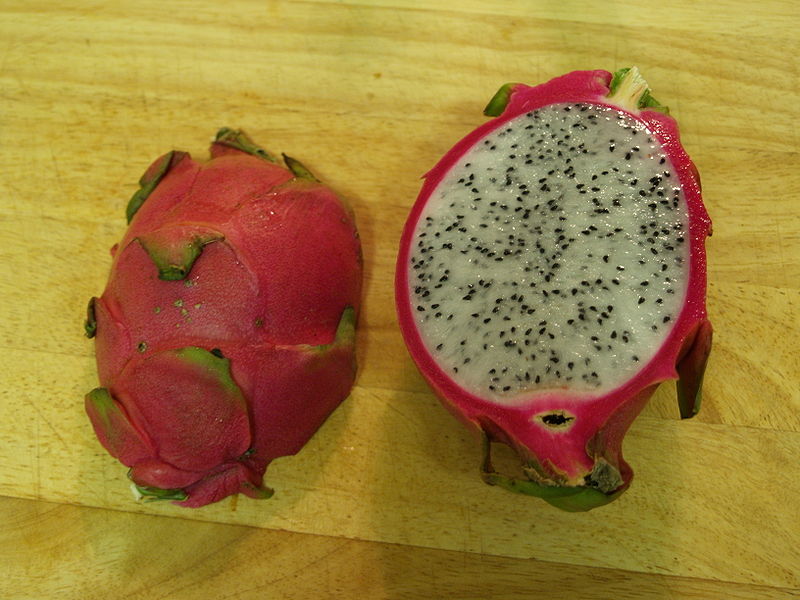
Cross section of a ripe red pitaya
Hylocereus undatus pitayas at a market stall in Taiwan.A Pitaya (pronounced /pɨˈtaɪ.ə/) or pitahaya (English pronunciation: /ˌpɪtəˈhaɪ.ə/) is the fruit of several cactus species, most importantly of the genus Hylocereus (sweet pitayas). These fruit are commonly known as dragon fruit – cf. Chinese huǒ lóng guǒ 火龍果/火龙果 "fire dragon fruit" and lóng zhū guǒ "dragon pearl fruit", or Vietnamese thanh long (green dragon). Other vernacular names are strawberry pear or nanettikafruit.

If not otherwise stated, this article's content refers specifically to the pitayas of Hylocereus species, or "dragon fruit".
Distribution
The vine-like epiphytic Hylocereus Pitaya producing cacti are native to Mexico, Central America, and South America. They are also cultivated in Asian countries such as Taiwan, Vietnam, Thailand, the Philippines, Sri Lanka and Malaysia. They are also found in Okinawa, Hawaii, Israel, northern Australia and southern China.
Varieties

Selling dragon fruit juice in ThailandStenocereus fruit (sour pitayas) are of more local importance, being commonly eaten in the arid regions of the Americas. They are more sour and refreshing, with juicier flesh and a stronger taste, and are relished by hikers. The common Sour Pitaya or pitaya agria (S. gummosus)[1] in the Sonoran Desert has been an important food source for Native American peoples. The Seri people of northwestern Mexico still harvest the highly appreciated fruit[2], and call the plant ziix is ccapxl – "thing whose fruit is sour". The fruit of related species, such as S. queretaroensis and Dagger Cactus (S. griseus)[3], are also locally important food. Somewhat confusingly, the Organ Pipe Cactus (S. thurberi) fruit (called ool by the Seris) is the pitahaya dulce ("sweet pitahaya") of its native lands, as dragon fruit are not grown there in numbers. It still has a more tart aroma than Hylocereus fruit, described as somewhat reminiscent of watermelon; it has some uses in folk medicine.
Cultivation

Pitaya being grown commercially in southern Vietnam
Cereus repandus plants with Pitaya fruits in Sde Nitzan, IsraelAfter thorough cleaning of the seeds from the pulp of the fruit, the seeds may be stored when dried. Ideally, the fruit must be unblemished and overripe. Seeds grow well in a compost or potting soil mix - even as a potted indoor plant. Pitaya cacti usually germinate between 11 and 14 days after shallow planting. As they are cacti, overwatering is a concern for home growers. As their growth continues, these climbing plants will find something to climb on, which can involve putting aerial roots down from the branches in addition to the basal roots. Once the plant reaches a mature 10 lbs weight, one may see the plant flower.
Fruit

Ripe dragon fruits, VietnamSweet pitayas come in three types, all with leathery, slightly leafy skin:

Hylocereus undatus (red pitaya) has red-skinned fruit with white flesh. This is the most commonly-seen "dragon fruit".
Hylocereus costaricensis (Costa Rica pitaya, often called H. polyrhizus) has red-skinned fruit with red flesh
Hylocereus megalanthus (yellow Consumption
To prepare a pitaya for consumption, the fruit is cut open to expose the flesh.[9] The fruit's texture is sometimes likened to that of the kiwifruit due to the presence of black, crunchy seeds.[9] The flesh, which is eaten raw, is mildly sweet and low in calories.[9] Dragon fruit should not be used to accompany strong-tasting food, except to "clean the palate" between dishes.[citation needed] The seeds are eaten together with the flesh, have a nutty taste and are rich in lipids[10], but they are indigestible unless chewed. The fruit is also converted into juice or wine, or used to flavour other beverages. The flowers can be eaten or steeped as tea. The skin is not eaten, and in farm-grown fruit it may be polluted with pesticides.
pitaya, formerly in Selenicereus) has yellow-skinned fruit with white flesNutritional information

Dragon fruit served in a buffet
Red Pitaya, ready to eatThe typical nutritional values per 100 g of raw pitaya (of which 55 g are edible) are as follows:

Water 80-90 g
Carbohydrates 9-14 g
Protein 0.15-0.5 g
Fat 0.1-0.6 g
Fiber 0.3-0.9 g
Ash 0.4-0.7 g
Calories: 35-50
Calcium 6–10 mg
Iron 0.3-0.7 mg
Phosphorus 16 – 36 mg
Carotene (Vitamin A) traces
Thiamine (Vitamin B1) traces
Riboflavin (Vitamin B2) traces
Niacin (Vitamin B3) 0.2-0.45 mg
Ascorbic acid (Vitamin C) 4–25 mg
They may change subject to cultivation conditions.

The fatty acid compositions of two pitaya seed oils were determined as follows:[10]

"Hylocereus polyrhizus" (probably Costa Rica Pitaya) Hylocereus undatus (Red Pitaya)
Myristic acid 0.2% 0.3%
Palmitic acid 17.9% 17.1%
Stearic acid 5.49% 4.37%
Palmitoleic acid 0.91% 0.61%
Oleic acid 21.6% 23.8%
Cis-vaccenic acid 3.14% 2.81%
Linoleic acid 49.6% 50.1%
Linolenic acid 1.21% 0.98%

Particularly red-skinned pitayas are a good source of Vitamin C.[12]
Pitayas are rich in fiber and minerals, notably phosphorus and calcium. Red pitayas seem to be richer in the former, yellow ones in the latter.[12]
The seeds are rich in polyunsaturated fatty acids, and in particular Red Pitayas contain very little saturated fat.[10]
Pitahayas also contain significant quantities of phytoalbumin antioxidants, which prevent the formation of cancer-causing free radicals.[13]
In Taiwan, diabetics use the fruit as a food substitute for rice and as a source of dietary fibre.[8]
Pitaya supposedly increases excretion of heavy metal toxins and lowers cholesterol and blood pressure. Eaten regularly, it is credited with alleviating chronic respiratory tract ailments.[8]h.
http://en.wikipedia.org/wiki/File:Pitaya2.jpg

Avocado


Avocado
From Wikipedia, the free encyclopediaJump to: navigation, search
For the place in California, see Avocado, California. For the Pearl Jam album, see Pearl Jam (album).
Avocado

Avocado fruit and foliage, Huntington Library, California

Ripe avocado fruit and cross-section
Scientific classification
Kingdom: Plantae

Phylum: Angiosperms

Order: Laurales

Family: Lauraceae

Genus: Persea

Species: P. americana

Binomial name
Persea americana
Mill
Synonyms
Persea gratissima


The avocado (Persea americana) is a tree native to the Caribbean, Mexico,[1] South America and Central America, classified in the flowering plant family Lauraceae along with cinnamon, camphor and bay laurel. Avocado or alligator pear also refers to the fruit (technically a large berry that contains a large seed[2]) of the tree, which may be pear-shaped, egg-shaped or spherical.

Avocados are a commercially valuable fruit and are cultivated in tropical climates throughout the world (and some temperate ones, such as California), producing a green-skinned, pear-shaped fruit that ripens after harvesting. Trees are partially self-pollinating and often are propagated through grafting to maintain a predictable quality and quantity of the

Contents [hide]
1 History
1.1 Etymology
2 Cultivation
2.1 Harvest and post-harvest
2.2 Breeding
2.3 Propagation and rootstocks
2.4 Growing indoors
2.5 Diseases
2.6 Cultivation in California
2.7 A cultivars
2.8 B cultivars
2.9 Other cultivars
3 Avocado-related international trade issues
4 Culinary uses
5 Nutritional value
6 As a houseplant
7 Toxicity to animals
8 Co-evolution
9 See also
10 References
11 Further reading
12 External links

[edit] History

Native "criollo" avocados, the precursor to today's domesticated varietiesP. americana, or the avocado, originated in the state of Puebla, Mexico. The native, undomesticated variety is known as a criollo, and is small, with dark black skin, and contains a large seed.[3] The oldest evidence of avocado use was found in a cave located in Coxcatlán, Puebla, Mexico that dates to around 10,000 years BC. The avocado tree also has a long history of cultivation in Central and South America; a water jar shaped like an avocado, dating to AD 900, was discovered in the pre-Incan city of Chan Chan.[4] The earliest known written account of the avocado in Europe is that of Martín Fernández de Enciso (c. 1470–c. 1528) in 1518 or 1519 in his book, Suma De Geographia Que Trata De Todas Las Partidas Y Provincias Del Mundo..[5][6] The first written record in English of the use of the word 'avocado' was by Hans Sloane in a 1696 index of Jamaican plants. The plant was introduced to Indonesia in 1750, Brazil in 1809, the Levant in 1908, and South Africa and Australia in the late 19th century.

[edit] Etymology
The word 'avocado' comes from the Nahuatl word ahuacatl ('testicle', a reference to the shape of the fruit).[7] Avocados were known by the Aztecs as 'the fertility fruit'. In some countries of South America, such as Argentina, Bolivia, Chile, Peru, and Uruguay, the avocado is known by its Quechua name, palta. In other Spanish-speaking countries, it is called aguacate, and in Portuguese it is abacate. The fruit is sometimes called an avocado pear or alligator pear (due to its shape and the rough green skin of some cultivars). The Nahuatl ahuacatl can be compounded with other words, as in ahuacamolli, meaning 'avocado soup or sauce', from which the Mexican Spanish word guacamole derives.[8]

Also in some South American countries, the avocado is called manzana del invierno, which translates as 'winter apple'.[citation needed]

[edit] Cultivation

Persea americana, young avocado plant (seedling), complete with parted pit and roots
Worldwide avocado output in 2005Food and agriculture

Avocado fruit (cv. 'Fuerte'); left: whole, right: in section
Country Quantity (Tm) World Rank[9]
Mexico 1,040,390 1
Indonesia 263,575 2
United States of America 214,000 3
Colombia 185,811 4
Brazil 175,000 5
Chile 163,000 6
Dominican Republic 140,000 7
Peru 102,000 8
China 85,000 9
Ethiopia 81,500 10
[9]

The tree grows to 20 m (69 ft), with alternately arranged leaves 12 centimetres (4.7 in) – 25 centimetres (9.8 in) long. The flowers are inconspicuous, greenish-yellow, 5 millimetres (0.2 in) – 10 millimetres (0.4 in) wide. The pear-shaped fruit is 7 centimetres (2.8 in) – 20 centimetres (7.9 in) long, weighs between 100 grams (3.5 oz) – 1,000 grams (35 oz), and has a large central seed, 5 centimetres (2.0 in) – 6.4 centimetres (2.5 in) long.[10]

The subtropical species needs a climate without frost and with little wind. High winds reduce the humidity, dehydrate the flowers, and affect pollination. When even a mild frost occurs, premature fruit drop may occur, although the Hass cultivar can tolerate temperatures down to −1°C. The trees also need well-aerated soils, ideally more than 1 m deep. Yield is reduced when the irrigation water is highly saline. These soil and climate conditions are available only in a few areas of the world, particularly in southern Spain, Crete, the Levant, South Africa, Peru, parts of central and northern Chile, Vietnam, Indonesia, parts of southern India, Sri Lanka, Australia, New Zealand, the Philippines, Malaysia, Central America, the Caribbean, Mexico, California, Arizona, New Mexico, Texas, Florida and Ecuador. Each region has different types of cultivars. Mexico, the center of origin and diversity of this species, is the largest producer of the Hass variety, with over 1 million tonnes produced annually.

[edit] Harvest and post-harvest
An average avocado tree produces about 1200 avocados annually. Commercial orchards produce an average of 7 tonnes per hectare each year, with some orchards achieving 20 tonnes per hectare.[11] Biennial bearing can be a problem, with heavy crops in one year being followed by poor yields the next. The avocado tree does not tolerate freezing temperatures, and can be grown only in subtropical or tropical climates.

The avocado is a climacteric fruit (the banana is another), which means that it matures on the tree but ripens off the tree. Avocados used in commerce are picked hard and green and kept in coolers at 38 to 42°F (3.3 to 5.6°C) until they reach their final destination. Avocados must be mature to ripen properly. Avocados that fall off the tree ripen on the ground. Generally, the fruit is picked once it reaches maturity; Mexican growers pick Hass-variety avocados when they have more than 23% dry matter and other producing countries have similar standards. Once picked, avocados ripen in a few days at room temperature (faster if stored with other fruits such as apples or bananas, because of the influence of ethylene gas). Premium supermarkets sell pre-ripened avocados treated with synthetic ethylene to hasten the ripening process.[12] In some cases, avocados can be left on the tree for several months, which is an advantage to commercial growers who seek the greatest return for their crop; if the fruit remains unpicked for too long, however, it falls to the ground.

[edit)
http://en.wikipedia.org/wiki/Avocado

Mango


Mango
From Wikipedia, the free encyclopediaJump to: navigation, search
This article is about the fruit. For other meanings of the word, see Mango (disambiguation).
It has been suggested that Mangifera indica be merged into this article or section. (Discuss)
Mango

Australian Mango with its cross section
Scientific classification
Kingdom: Plantae

Division: Angiospermae

Class: Magnoliopsida

Order: Sapindales

Family: Anacardiaceae

Genus: Mangifera

Species: M.indica

Binomial name
Mangifera indica
L.


Ripe Sindhri mangoes from Sind, PakistanMango is a fruit which is indigenous to the Indian subcontinent,[1] belonging to the genus Mangifera, consisting of numerous species of tropical fruiting trees in the flowering plant family Anacardiaceae. While other Mangifera species (e.g. Horse Mango, M. foetida) are also grown on a more localized basis, Mangifera indica – the Common Mango or Indian Mango – is the only mango tree commonly cultivated in many tropical and subtropical regions, and its fruit is distributed essentially world-wide.

In several cultures, its fruit and leaves are ritually used as floral decorations at weddings, public celebrations and religious ceremonies.

Contents [hide]
1 Etymology
2 Description
3 Cultivation and uses
3.1 Potential for contact dermatitis
3.2 Food
3.2.1 Cuisine
3.3 Nutrients and phytochemicals
4 Cultural significance
5 Production and consumption
6 Cultivars
7 See also
8 Gallery
9 References
10 Further reading
11 External links

[edit] Etymology
The English word mango probably originated from the Malayalam word "maanga" (മാങ്ങ (māṅṅa)), then via Portuguese as manga.[2] The word's first recorded attestation in a European language was a text by Ludovico di Varthema in Italian in 1510, as Manga; the first recorded occurrences in languages such as French and post-classical Latin appear to be translations from this Italian text. The origin of the -o ending in English is unclear.[2]

When mangoes were first imported to the American colonies in the 17th century, they had to be pickled due to lack of refrigeration. Other fruits were also pickled and came to be called "mangoes" (especially bell peppers), and by the 18th century, the word "mango" became a verb meaning to pickle".[3]

[edit] Description

Mango inflorescence and immature fruitMango trees (Mangifera indica L.) grow 35–40 m (115–130 ft) tall, with a crown radius of 10 m (33 ft). The mango tree is long-lived, as some specimens still fruit after 300 years.[citation needed] In deep soil the taproot descends to a depth of 6 m (20 ft) and the profuse, wide-spreading feeder roots also send down many anchor roots, which penetrate several feet of soil. The leaves are evergreen, alternate, simple, 15–35 cm (5.9–14 in) long and 6–16 cm (2.4–6.3 in) broad; when the leaves are young they are orange-pink, rapidly changing to a dark glossy red, then dark green as they mature. The flowers are produced in terminal panicles 10–40 cm (3.9–16 in) long; each flower is small and white with five petals 5–10 mm (0.20–0.39 in) long, with a mild sweet odor suggestive of lily of the valley. The fruit takes three to six months to ripen.

The ripe fruit is variable in size and color. Cultivars are variously yellow, orange, red or green and carry a single flat, oblong pit that can be fibrous or hairy on the surface and which does not separate easily from the pulp. Ripe, unpeeled fruit gives off a distinctive resinous, sweet smell. Inside the pit 1–2 mm (0.039–0.079 in) thick is a thin lining covering a single seed, 4–7 mm (0.16–0.28 in) long. The seed contains the plant embryo.


The seed of mango can be hairy or fibrous
The "hedgehog" style is a common way of eating mangoes (left). A cross section of a mango can be seen on the right, not quite fully halving the fruit as the stone is not visible[edit] Cultivation and uses

Mango orchard in Multan, Pakistan
Unripe mangoes on a mango treeMangoes have been cultivated in the Indian subcontinent for thousands of years[4] and reached East Asia between the 5th–4th century BC. By the 10th century AD, cultivation had begun in East Africa.[4] The 14th century Moroccan traveler, Ibn Battuta, reported it at Mogadishu.[5] Cultivation came later to Brazil, West Indies and Mexico, where an appropriate climate allows its growth.[4]

Mango is now cultivated in most frost-free tropical and warmer subtropical climates; nearly half of the world's mangoes are cultivated in India alone.[6][7][8] Mango is also being grown in Andalusia, Spain (mainly in Málaga province), which is one of the few places in mainland Europe that allow growth of tropical plants and fruit trees.[9] Many of the 1,000 + mango cultivars are easily cultivated using grafted saplings, ranging from the "turpentine mango" (named for its strong taste of turpentine, which according to the Oxford Companion to Food some varieties actually contain) to the huevos de toro ("eggs of the bull", a euphemism for "bull's testicles", referring to the shape and size).

Other cultivators include North, South and Central America, the Caribbean, south, west and central Africa, Australia, China, Pakistan, Bangladesh, and Southeast Asia. Though India is the largest producer of mangoes, it accounts for less than one percent of the international mango trade, consuming most of its own output.[10]

Dwarf or semi-dwarf varieties serve as ornamental plants and can be grown in containers.

A wide variety of diseases can afflict mangoes; see List of mango diseases.

[edit] Potential for contact dermatitis
Potential for contact dermatitis
Mango peel contains urushiol, the chemical in poison ivy and poison sumac that can cause urushiol-induced contact dermatitis in susceptible people.[11] Cross-reactions between mango contact allergens and urushiol have been observed.[12] Those with a history of poison ivy or poison oak contact dermatitis may be most at risk for such an allergic reaction.[13] Urushiol is also present in mango leaves and stems. During mango's primary ripening season, it is the most common source of plant dermatitis in Hawaii.[14]

[edit] Food

An unripe mango of Ratnagiri (India)Mango is generally sweet, although the taste and texture of the flesh varies across cultivars, some having a soft, pulpy texture similar to an over-ripe plum, while the flesh of others is firmer, like a cantaloupe or avocado, or may have a fibrous texture. For consumption of unripe, pickled or cooked fruit, the mango skin may be consumed comfortably, but has potential to cause contact dermatitis (above) of the lips, gingiva or tongue in susceptible people. In ripe fruits which are commonly eaten fresh, the skin may be thicker and bitter tasting, so is typically not eaten.

[edit] Cuisine

Commercially packaged mango powder sold in clear plastic wrappingMangoes are widely used in cuisine. Sour, unripe mangoes are used in chutneys, athanu, pickles, side dishes, or may be eaten raw with salt, chili, or soy sauce. A cooling summer drink called panna or panha comes from mangoes.

Ripe mangoes are typically eaten fresh; however, they can have many other culinary uses. Mango Lassi, a popular drink made throughout South Asia[citation needed], is created by mixing ripe mangoes or mango pulp with yogurt and sugar. Ripe mangoes are also used to make curries. Aamras is a popular pulp/thick juice made of mangoes with sugar or milk and is consumed along with bread.

Mangoes are used in preserves like moramba, amchur (dried and powdered unripe mango) and pickles, including a spicy mustard-oil pickle. Ripe mangoes are often cut into thin layers, desiccated, folded, and then cut. These bars are similar to dried guava fruit bars available in some countries. The fruit is also added to cereal products like muesli and oat granola.


Native green mangoes from the Philippines
A basket of ripe mangoes from BangladeshUnripe mango may be eaten with bagoong (especially in the Philippines), fish sauce or with dash of salt. Dried strips of sweet, ripe mango (sometimes combined with seedless tamarind to form Mangorind) are also popular. Mangoes may be used to make juices, mango nectar, and as a flavoring and major ingredient in ice cream and sorbetes.

Mango is used to make juices, smoothies, ice cream, fruit bars, raspados, aguas frescas, pies and sweet chili sauce, or mixed with chamoy, a sweet and spicy chili paste. It is popular on a stick dipped in hot chili powder and salt or also as a main ingredient in fresh fruit combinations. In Central America, mango is either eaten green mixed with salt, vinegar, black pepper and hot sauce, or ripe in various forms. Toasted and ground pumpkin seed (called pepita) with lime and salt are the norm when eating green mangoes. Some people also add soy sauce or chili sauce.

Pieces of mango can be mashed and used as a topping on ice cream or blended with milk and ice as milkshakes. Sweet glutinous rice is flavored with coconut then served with sliced mango as a dessert. In other parts of Southeast Asia, mangoes are pickled with fish sauce and rice vinegar. Green mangoes can be used in mango salad with fish sauce and dried shrimp. Mango may be used as a topping to shaved ice along with condensed milk.

[edit] Nutrients and phytochemicals
Mango, raw Nutritional value per 100 g (3.5 oz)
Energy 272 kJ (65 kcal)
Carbohydrates 17.00 g
Sugars 14.8 g
Dietary fiber 1.8 g
Fat 0.27 g
Protein 0.51 g
Vitamin A equiv. 38 μg (4%)
- beta-carotene 445 μg (4%)
Thiamine (Vit. B1) 0.058 mg (4%)
Riboflavin (Vit. B2) 0.057 mg (4%)
Niacin (Vit. B3) 0.584 mg (4%)
Pantothenic acid (B5) 0.160 mg (3%)
Vitamin B6 0.134 mg (10%)
Folate (Vit. B9) 14 μg (4%)
Vitamin C 27.7 mg (46%)
Calcium 10 mg (1%)
Iron 0.13 mg (1%)
Magnesium 9 mg (2%)
Phosphorus 11 mg (2%)
Potassium 156 mg (3%)
Zinc 0.04 mg (0%)
Percentages are relative to US recommendations for adults.
Source: USDA Nutrient database

Mango is rich in a variety of phytochemicals[15] and nutrients. The fruit pulp is high in prebiotic dietary fiber, vitamin C, polyphenols and provitamin A carotenoids.[16]

Mango contains essential vitamins and dietary minerals. The antioxidant vitamins A, C and E compose 25%, 76% and 9% of the Dietary Reference Intake (DRI) in a 165 grams (5.8 oz) serving. Vitamin B6 (pyridoxine, 11% DRI), vitamin K (9% DRI), other B vitamins and essential nutrients such as potassium, copper and 17 amino acids are at good levels. Mango peel and pulp contain other phytonutrients, such as the pigment antioxidants – carotenoids and polyphenols – and omega-3 and -6 polyunsaturated fatty acids.

Mango peel contains pigments that may have antioxidant properties,[15][17] including carotenoids, such as the provitamin A compound, beta-carotene, lutein and alpha-carotene,[18] polyphenols[19][20] such as quercetin, kaempferol, gallic acid, caffeic acid, catechins, tannins, and the unique mango xanthone, mangiferin,[21] any of which may counteract free radicals in various disease processes as revealed in preliminary research.[22][23] Phytochemical and nutrient content appears to vary across mango species.[24] Up to 25 different carotenoids have been isolated from mango pulp, the densest of which was beta-carotene, which accounts for the yellow-orange pigmentation of most mango species.[25] Peel and leaves also have significant polyphenol content, including xanthones, mangiferin and gallic acid.[26]

The mango triterpene, lupeol[27] is an effective inhibitor in laboratory models of prostate and skin cancers.[28][29][30] An extract of mango branch bark called Vimang, isolated by Cuban scientists, contains numerous polyphenols with antioxidant properties in vitro[31] and on blood parameters of elderly humans.[32]

The pigment euxanthin, known as Indian yellow, is often thought to be produced from the urine of cattle fed mango leaves; the practice is described as having been outlawed in 1908 due to malnutrition of the cows and possible urushiol poisoning.[33] This supposed origin of euxanthin appears to rely on a single, anecdotal source, and Indian legal records do not outlaw such a practice.[34]

[edit] Cultural significance

Mango roundabout, Rajshahi, BangladeshThe mango is the national fruit of India,[35] Pakistan, and the Philippines.[citation needed]. The mango tree is the national tree of Bangladesh.[36]

In Hinduism, the perfectly ripe mango is often held by Lord Ganesha as a symbol of attainment, regarding the devotees potential perfection. Mango blossoms are also used in the worship of the goddess Saraswati.

Mango leaves are used to decorate archways and doors in Indian houses and during weddings and celebrations like Ganesh Chaturthi. Mango motifs and paisleys are widely used in different Indian embroidery styles and are found in Kashmiri shawls, Kanchipuram silk sarees, etc. Paisleys are also common to Iranian art, because of its pre-Islamic Zoroastrian past.

In Australia, where mangoes are considered to be a symbol of summer, the first tray of mangoes of the season is traditionally sold at an auction for charity.[37]
http://en.wikipedia.org/wiki/Mango

Papaya


Carica papaya
From Wikipedia, the free encyclopediaJump to: navigation, search
"Papaya" redirects here. For other uses, see Papaya (disambiguation).
Not to be confused with the American fruit called 'pawpaw', Asimina.
Not to be confused with Chaenomeles speciosa or Pseudocydonia, which like Carica papaya are called mugua.
Papaya

Papaya tree and fruit, from Koehler's Medicinal-Plants (1887)
Scientific classification
Kingdom: Plantae

(unranked): Angiosperms

(unranked): Eudicots

(unranked): Rosids

Order: Brassicales

Family: Caricaceae

Genus: Carica

Species: C. papaya

Binomial name
Carica papaya
L.

The papaya (from Carib via Spanish), papaw or pawpaw is the fruit of the plant Carica papaya, in the genus Carica. It is native to the tropics of the Americas, and was first cultivated in Mexico several centuries before the emergence of the Mesoamerican classic cultures.

It is a large tree-like plant, with a single stem growing from 5 to 10 metres (16 to 33 ft) tall, with spirally arranged leaves confined to the top of the trunk. The lower trunk is conspicuously scarred where leaves and fruit were borne. The leaves are large, 50–70 centimetres (20–28 in) diameter, deeply palmately lobed with 7 lobes. The tree is usually unbranched if unlopped. The flowers are similar in shape to the flowers of the Plumeria but are much smaller and wax-like. They appear on the axils of the leaves, maturing into the large 15–45 centimetres (5.9–18 in) long, 10–30 centimetres (3.9–12 in) diameter fruit. The fruit is ripe when it feels soft (like a ripe avocado or a bit softer) and its skin has attained an amber to orange hue.

It is the first fruit tree to have its genome deciphered.[1]

Contents [hide]
1 Common names
2 Cultivation
3 Uses
3.1 Gastronomy
3.2 Cooking
3.3 Medicine
4 Allergies and side effects
5 Medicinal potential
6 Diseases
7 Names in other languages
8 Photo gallery
9 Notes and references
10 See also
11 External links
Uses
Papaya can be used as a food, a cooking aid, and in medicine. The stem and bark are also used in rope production.

[edit] Gastronomy
The ripe fruit is usually eaten raw, without skin or seeds. The unripe green fruit of papaya can be eaten cooked, usually in curries, salads and stews. It has a relatively high amount of pectin, which can be used to make jellies.

Green papaya is used in Thai cuisine, both raw and cooked.[8]

The black seeds are edible and have a sharp, spicy taste. They are sometimes ground up and used as a substitute for black pepper. In some parts of Asia the young leaves of papaya are steamed and eaten like spinach. In parts of the world papaya leaves are made into tea as a preventative for malaria, though there is no real scientific evidence for the effectiveness of this treatment.[9]

Papaya, raw Nutritional value per 100 g (3.5 oz)
Energy 163 kJ (39 kcal)
Carbohydrates 9.81 g
Sugars 5.90 g
Dietary fibre 1.8 g
Fat 0.14 g
Protein 0.61 g
Vitamin A equiv. 55 μg (6%)
- beta-carotene 276 μg (3%)
Thiamine (Vit. B1) 0.04 mg (3%)
Riboflavin (Vit. B2) 0.05 mg (3%)
Niacin (Vit. B3) 0.338 mg (2%)
Vitamin B6 0.1 mg (8%)
Vitamin C 61.8 mg (103%)
Calcium 24 mg (2%)
Iron 0.10 mg (1%)
Magnesium 10 mg (3%)
Phosphorus 5 mg (1%)
Potassium 257 mg (5%)
Sodium 3 mg (0%)
Percentages are relative to US recommendations for adults.


[edit] Cooking
Green papaya fruit and the tree's latex are both rich in an enzyme called papain, a protease which is useful in tenderizing meat and other proteins. Its ability to break down tough meat fibers was used for thousands of years by indigenous Americans. It is included as a component in powdered meat tenderizers.

[edit] Medicine
Papaya is marketed in tablet form to remedy digestive problems.

Papain is also applied topically (in countries where it grows) for the treatment of cuts, rashes, stings and burns. Papain ointment is commonly made from fermented papaya flesh, and is applied as a gel-like paste. Harrison Ford was treated for a ruptured disc incurred during filming of Indiana Jones and the Temple of Doom by papain injections.[10]

Women in India, Bangladesh, Pakistan, Sri Lanka, and other countries have long used green papaya as a folk remedy for contraception and abortion. Enslaved women in the West Indies were noted for consuming papaya to prevent pregnancies and thus preventing their children from being born into slavery.[citation needed] Medical research in animals has confirmed the contraceptive and abortifacient capability of papaya, and also found that papaya seeds have contraceptive effects in adult male langur monkeys, possibly in adult male humans as well.[11] Unripe papaya is especially effective in large amounts or high doses. Ripe papaya is not teratogenic and will not cause miscarriage in small amounts. Phytochemicals in papaya may suppress the effects of progesterone.
http://en.wikipedia.org/wiki/Carica_papaya

Banana


Banana is the common name for herbaceous plants of the genus Musa and for the fruit they produce. Bananas come in a variety of sizes and colors when ripe, including yellow, purple, and red. In popular culture and commerce, "banana" usually refers to soft, sweet "dessert" bananas. By contrast, Musa cultivars with firmer, starchier fruit are called plantains. Many varieties of bananas are perennial. Refer to the Musa article for a list of the varieties of bananas and plantains.

They are native to tropical Southeast Asia, and are likely to have been first domesticated in Papua New Guinea.[1] Today, they are cultivated throughout the tropics.[2] They are grown in at least 107 countries,[3] primarily for their fruit, and to a lesser extent to make fiber, banana wine and as ornamental plants.

Although fruit of wild species (Musa balbisiana) have large, hard seeds, virtually all culinary bananas are "seedless", have only tiny seeds[citation needed]. Bananas are classified either as dessert bananas (meaning they are yellow and fully ripe when eaten) or as green cooking bananas.

Almost all export bananas are of the dessert types; however, only about 10–15% of production is for export. The United States and European Union are the dominant importers.[citation needed]

Bananas are naturally slightly radioactive,[4] more so than most other fruits, because of their high potassium content, and the small amounts of the isotope potassium-40 found in naturally occurring potassium. Proponents of nuclear power sometimes refer to the banana equivalent dose of radiation to support their arguments.[5][6] Banana shipments often set off the radiation monitors installed at US ports to detect illegal shipments of radiologic materials.

Contents [hide]
1 Botany
2 Taxonomy
3 Food and cooking
3.1 The fruit
3.2 The flower
3.3 The trunk
3.4 The leaves
3.5 Health benefits
4 Fibre
4.1 Textiles
4.2 Paper
5 Cultural roles
5.1 Arts
5.2 Symbols
5.3 Religion
5.4 East Africa
6 Other uses
7 History
7.1 Early cultivation
7.2 Plantation cultivation
8 Modern cultivation
8.1 Cavendish
8.2 Ripening
9 Storage and transport
10 Trade
11 Pests, diseases, and natural disasters
11.1 Panama Disease
11.2 Tropical Race 4
11.3 Black Sigatoka
11.3.1 In East Africa
11.4 Banana Bunchy Top Virus (BBTV)
12 Gallery
13 See also
14 Footnotes
15 References
16 Further reading
17 External links

Botany

Banana 'tree' (Musa sapientum) from 1911 Encyclopædia Britannica
Left to right: Plantains, red bananas, Bananitos (apple bananas), Cavendish bananasBanana, raw, edible parts Nutritional value per 100 g (3.5 oz)
Energy 371 kJ (89 kcal)
Carbohydrates 22.84 g
Sugars 12.23 g
Dietary fiber 2.6 g
Fat 0.33 g
Protein 1.09 g
Vitamin A equiv. 3 μg (0%)
Thiamine (Vit. B1) 0.031 mg (2%)
Riboflavin (Vit. B2) 0.073 mg (5%)
Niacin (Vit. B3) 0.665 mg (4%)
Pantothenic acid (B5) 0.334 mg (7%)
Vitamin B6 0.367 mg (28%)
Folate (Vit. B9) 20 μg (5%)
Vitamin C 8.7 mg (15%)
Calcium 5 mg (1%)
Iron 0.26 mg (2%)
Magnesium 27 mg (7%)
Phosphorus 22 mg (3%)
Potassium 358 mg (8%)
Zinc 0.15 mg (1%)
One banana is 100–150 g.
Percentages are relative to US recommendations for adults.
Source: USDA Nutrient database


M. acuminata x balbisiana inflorescence, partially opened.
Banana blossoms coming out of a banana heart.
Banana flowers and leaves for sale at Thanin market in Chiang Mai, ThailandThe banana plant is the largest herbaceous flowering plant.[7] Plants are normally tall and fairly sturdy and are often mistaken for trees, but their main or upright stem is actually a pseudostem that grows 6 to 7.6 metres (20 to 24.9 ft) tall, growing from a corm. Each pseudostem can produce a single bunch of bananas. After fruiting, the pseudostem dies, but offshoots may develop from the base of the plant.

Leaves are spirally arranged and may grow 2.7 metres (8.9 ft) long and 60 cm (2.0 ft) wide.[8] They are easily torn by the wind, resulting in the familiar frond look.[9]

Each pseudostem normally produces a single inflorescence, also known as the banana heart. (More are sometimes produced; an exceptional plant in the Philippines produced five.)[10] The inflorescence contains many bracts (sometimes incorrectly called petals) between rows of flowers. The female flowers (that can develop into fruit) appear in rows further up the stem from the rows of male flowers. The ovary is inferior, meaning that the tiny petals and other flower parts appear at the tip of the ovary.

Banana fruit develop from the banana heart, in a large hanging cluster, made up of tiers (called hands) with up to 20 fruit to a tier. The hanging cluster is known as a bunch, comprising 3–20 tiers, or commercially as a "banana stem", and can weigh from 30–50 kilograms (66–110 lb). In common usage, bunch applies to part of a tier containing 3-10 adjacent fruits.

Individual banana fruits (commonly known as a banana or 'finger'), average 125 grams (0.28 lb), of which approximately 75% is water and 25% dry matter. There is an protective outer layer (a peel or skin) with numerous long, thin strings (the phloem bundles), which run lengthwise between the skin and the edible inner portion. The inner part of the common yellow dessert variety splits easily lengthwise into three sections that correspond to the inner portions of the three carpels.

The fruit has been described as a "leathery berry".[11] In cultivated varieties, the seeds are diminished nearly to non-existence; their remnants are tiny black specks.

http://en.wikipedia.org/wiki/Banana